Power of the Perp Walk
How the circulation of images delivers judgement without process, from Warhol’s ‘Death and Disaster’ series to today’s regime of algorithmic humiliation
By
Nato Thompson and Marisa Mazria Katz
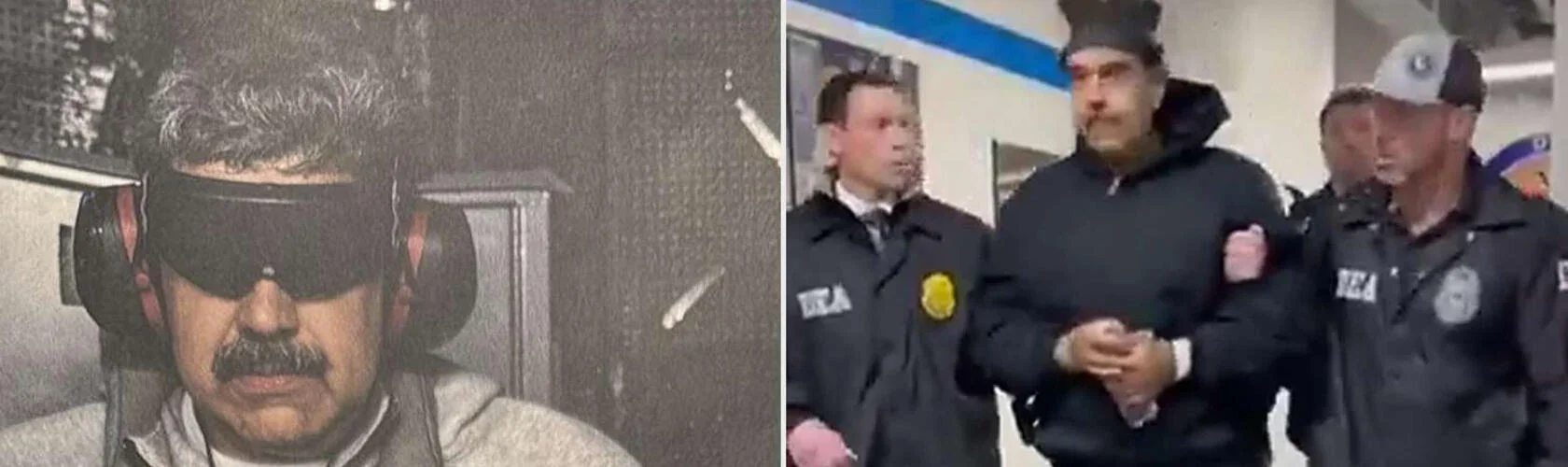
On 3 January, news broke that Venezuela’s president, Nicolás Maduro, and his wife, Cilia Flores, had been captured by US Delta Force commandos in their Caracas compound and flown to the US to face narco-terrorism charges. As the story spread across news feeds, one image that quickly came to stand in for the event itself showed Maduro as he was led into the offices of the US Drug Enforcement Administration (DEA). Wearing white socks and black slides, a hoodie and a grey beanie perched atop his head, he is flanked by two DEA agents in branded jackets, his cuffed hands clutching a plastic water bottle.
The image is humbling by design. This perp walk is, ultimately, a walk of shame. Maduro, Venezuela’s strongman president, appears tired and thirsty – a frumpy guy in a lopsided hat and leisurewear. As with so many images of fallen authority, the scene carries a familiar visual charge. The mind moves easily to other images of carceral shame: Jeffrey Epstein’s bedraggled mugshot; a courtroom sketch of a grey-haired, tired Sean Combs; or Saddam Hussein, bearded and dishevelled after being pulled from his spider hole. Power, briefly, is reduced to a body.